In an era where over 5 billion people are connected to the internet, digital engagement has become the central way small businesses communicate with customers. Unlike the past, where contact channels were limited to phone and email, today every digital interaction, on social media, on the site, or in an app, is an opportunity to create a real connection with the audience.
Global consumers expect responses within minutes, not days. They want to see actual business owners, not generic bots, and receive real value in every interaction. The bar for what counts as 'engagement' has risen, and businesses still posting one branded image a week with a forgettable caption are quietly losing ground to competitors who treat engagement as a daily practice.
This article isn't another generic guide to 'social media presence'. It's a practical analysis of what's actually working in 2026 for small and mid-sized businesses: which channels to start with, how to measure return on investment, when AI helps versus hurts, and how to build an audience that doesn't depend on a single algorithm.
What Digital Engagement Actually Means, And Why It's Not 'Followers'
Digital engagement is a combination of likes, comments, shares, watch time, clicks and conversions, but it's more than the sum of those metrics. It's the ratio between exposure and action. A page with 100,000 followers generating 50 comments per post is less 'engaged' than a page with 5,000 followers generating 200 comments.
The distinction matters fundamentally for small businesses. Algorithms on Meta, TikTok and LinkedIn favor engaged content and amplify its organic reach. A business investing in a real audience and valuable content sees growth even without massive marketing budgets. A business buying followers or relying on generic posts burns budget without results.
Knowing the Customer in Depth: The First Step Before Strategy
The first step is to know your customers deeply. Collect information through surveys, data analysis and CRM systems. 65% of buyers expect brands to understand their unique needs and tailor communication accordingly. Personalization is no longer a bonus, it's a baseline expectation.
Practical tools: short polls in Instagram Stories, opening a DM conversation with 10 customers a month, analyzing recurring words in reviews, and reviewing analytics reports on traffic source. This data tells a story: who the customer is, what interests them, when they're active, and how they buy.
Business owners looking for shortcuts with generic marketing personas get generic results. An hour a week of real conversation with customers gives more insight than any marketing book.
Multi-Channel Marketing: SMS, Instagram, TikTok and Email
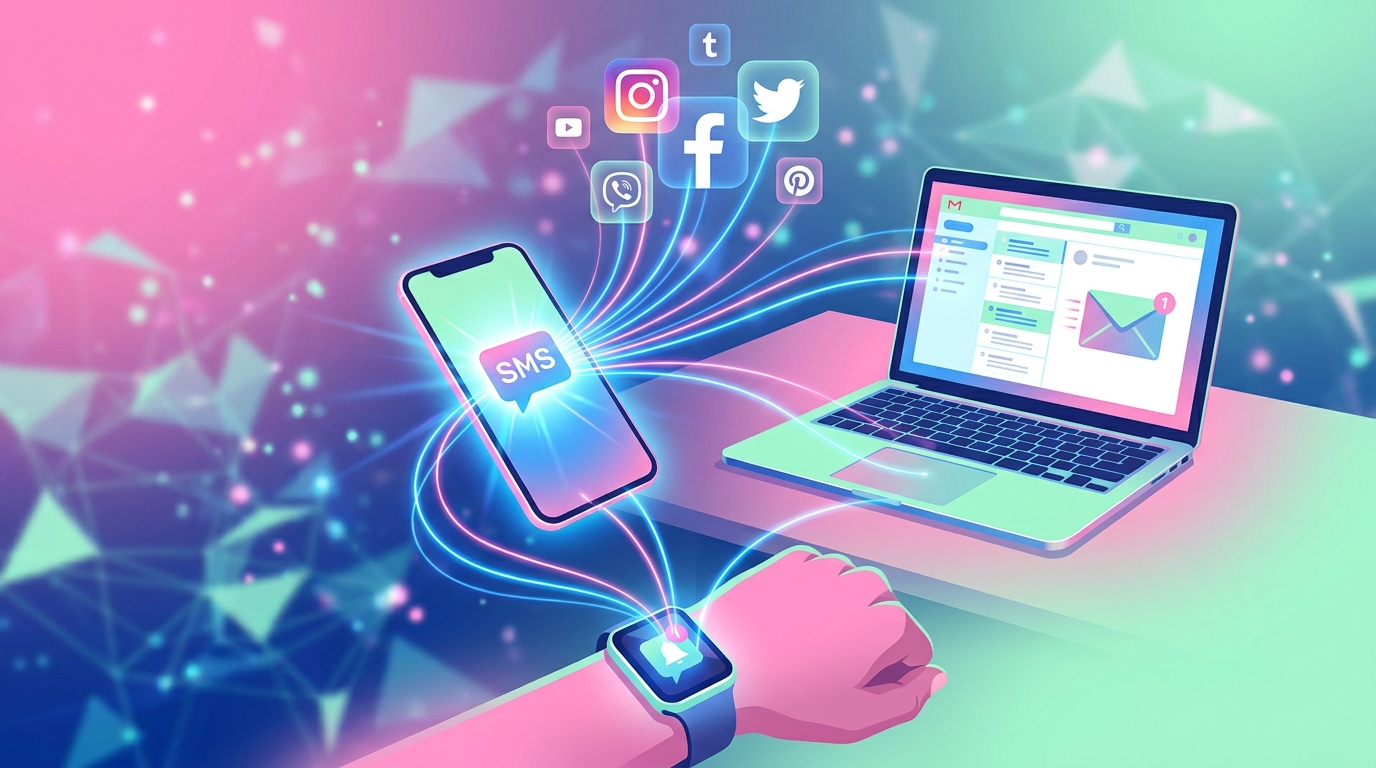
Multi-channel marketing is the key to success. Operate on SMS, apps, smart chatbots and social networks in parallel. In most modern markets, four platforms dominate: messaging apps for direct communication and customer service, Instagram and TikTok for brand and audience building, and Email for an existing audience that has already purchased.
Each channel plays a different role in the customer journey. TikTok excels at initial brand exposure, Instagram is good for building trust over time, messaging apps are the conversion and service channel, and Email has the highest ROI of any channel (per DMA, $42 for every dollar invested in email marketing).
The common mistake is spreading the same content across all channels. Each platform requires unique adaptation: TikTok needs short vertical videos, LinkedIn needs professional content, and messaging needs personal conversation. A small team that focuses on two channels excellently does better than four channels mediocrely.
The Power of Conversational Commerce
Messaging-based commerce, through WhatsApp Business API, Instagram DMs, and SMS, has become a dominant engagement channel globally. Businesses using messaging API platforms see open rates of 90%+, versus 20% on email. But there are rules: customers must explicitly opt in, and every message outside the 24-hour conversation window must follow approved templates.
Platforms like Twilio, Wati, and Klaviyo SMS allow businesses to start working with messaging APIs without writing code. Integration with CRM and ecommerce systems enables automated messages on order status, shipping updates, and abandoned carts, all while respecting privacy regulations.
Interactive Content: What Actually Generates Response
Interactive content is the fuel that drives engagement. Educational series on TikTok, eye-catching email graphics, useful blog articles and how-to videos, all of these build trust and strengthen the connection with the audience. Original content that provides real value is the best investment a small business can make.
Formats that work in 2026: polls in Instagram Stories (generating response within under 10 seconds), open questions on LinkedIn (inviting deep responses), behind-the-scenes videos on TikTok (creating human connection), and live Q&A sessions (building community).
Interactive content doesn't have to be sophisticated. A real question from a business owner to their audience, like 'what frustrates you most in your industry?', can generate dozens of responses that also serve as research material for the next piece of content.
AI and Digital Engagement: When to Help, When to Harm
AI tools like ChatGPT, Claude and Jasper became daily working tools in marketing. They're excellent for generating ideas, drafting copy and initial writing. The danger is using them as a replacement for a human voice. Customers easily identify generic AI content, and trust suffers.
Correct usage: AI for ideas and drafts, humans for editing and signature. AI tools are excellent for analyzing comments, summarizing reviews, and identifying trends in the audience. But the brand voice, personal anecdote, and local humor are things that require human input.
The worst mistake: generic chatbots that can't answer simple questions and drag customers through canned responses. Better no chatbot than a chatbot that gets in the way.
ROI Metrics: How to Actually Measure Return
Engagement without conversion isn't success, it's a noise-generation exercise. Small businesses must connect engagement metrics to business metrics: how many clicks become signups, how many signups become purchases, and how many customers become repeat customers.
Practical tools: UTM tags on every link distributed across networks, GA4 to track the full journey, and Meta Pixel and Google tags for conversion tracking. The combination provides a picture of where genuinely valuable customers actually come from.
A metric worth tracking: Customer Acquisition Cost versus Customer Lifetime Value. A business paying $15 to acquire a customer who generates $60 over their first year shows a 4x ROI. A business paying $60 for a customer who generates $75 has marginal ROI that won't survive growth.
Building an Audience That Doesn't Depend on the Algorithm
Algorithms change. Instagram in 2026 isn't Instagram in 2022. A business that built its entire audience on a single platform is completely dependent on business decisions of a company it has no influence over. The solution: own the audience through email lists, opted-in SMS lists, and private communities (Discord, private groups).
Slow and consistent email list building is the highest-ROI long-term investment. Comparison: 10,000 Instagram followers are worth less than 1,000 active email addresses in business value terms. Open rates on email, even if dropping to 25-30%, still exceed organic reach on social platforms (usually under 5%).
Micro-Influencers: Why They Work Better Than Celebrities
Micro-influencers (10,000-100,000 followers) generate engagement rates 3-5 times higher than those of large influencers. Collaboration with 10 micro-influencers in a specific niche generates better results than paying a single celebrity a six-figure fee.
The key is real vetting of audience quality before engagement. Real followers, comments with substance rather than just emojis, and a target audience that fits the product's niche. Long-term collaboration with one influencer typically outperforms a one-off campaign.
Social Commerce: When a Social Network Becomes a Sales Channel
In 2023, over 106 million people purchased products directly through social networks. Your presence needs to be everywhere your customers are. Instagram Shopping, TikTok Shop and Facebook Shops enable direct selling inside the platform.
The advantage: reduced friction between exposure and purchase. The customer sees a product, taps, and buys without leaving the app. The disadvantage: lower control over the customer experience and the data. The solution: a combination of social commerce alongside an independent site that serves as the hub.
Handling Negative Comments and Crisis Management
Every business will get a negative comment. The question is how you respond. A response within 24 hours, personally and substantively, can turn negative feedback into a positive experience. Silencing or deleting negative comments, in most cases, magnifies the problem.
Recommended protocol: rapid identification (social listening tools like Brand24 or Mention), personal professional response in the public space, then move to a private channel for resolution. Documentation of every interaction helps identify patterns and improve processes.
A real crisis requires a structured plan: who speaks on behalf of the business, which channels activate, and when to bring in legal counsel. A business that prepares a plan in advance handles the moment far better.
Privacy and Regulation: GDPR, CCPA and Beyond
Digital engagement involves data collection, and every collection is subject to privacy regulation. Requirements include transparency about what data is collected, the ability to delete it, and basic data security. GDPR in Europe, CCPA in California, and similar regulations elsewhere impose specific obligations.
Practical implications: the cookie banner must offer a real refusal option (not just 'accept'), mailing lists must use double opt-in, and a deletion request must be honored within a reasonable timeframe. Businesses that implement these requirements aren't just complying, they're building trust.
Realistic Budget for a Small Business: What It Costs
The first question of every business owner: how much to budget for digital marketing. Rule of thumb: 7-10% of projected revenue to marketing, and within that 60-70% to digital engagement. A business with $300K annual revenue should budget $21K-$30K for marketing, and from that $13K-$20K for digital engagement.
Internal allocation: 40% to content (photography, editing, copywriting), 30% to paid promotion (Meta Ads, Google Ads), 15% to tools (CRM, analytics, automation), and 15% to a professional (internal or external). This split varies by niche and business stage.
Businesses just starting can begin smaller, but without budget they get stuck at organic saturation. Organic alone works up to a certain audience size, then you need to push with money.
Bottom Line: Consistency Matters More Than Sophistication
The key to success in digital engagement is consistency. Don't publish one post a week and expect results. Build a content plan, be present consistently, respond to comments and messages, and build a community around your brand. Businesses that succeed are those that treat digital engagement as a marathon, not a sprint.
Recommendation for business owners starting out: choose one or two platforms, build a 12-week content calendar, publish consistently, and at the end of the quarter check what worked and what didn't. Gradual continuous improvement produces bigger results than a 'grand strategy' that doesn't get executed. In markets where most competitors aren't consistent, those who are stand out.