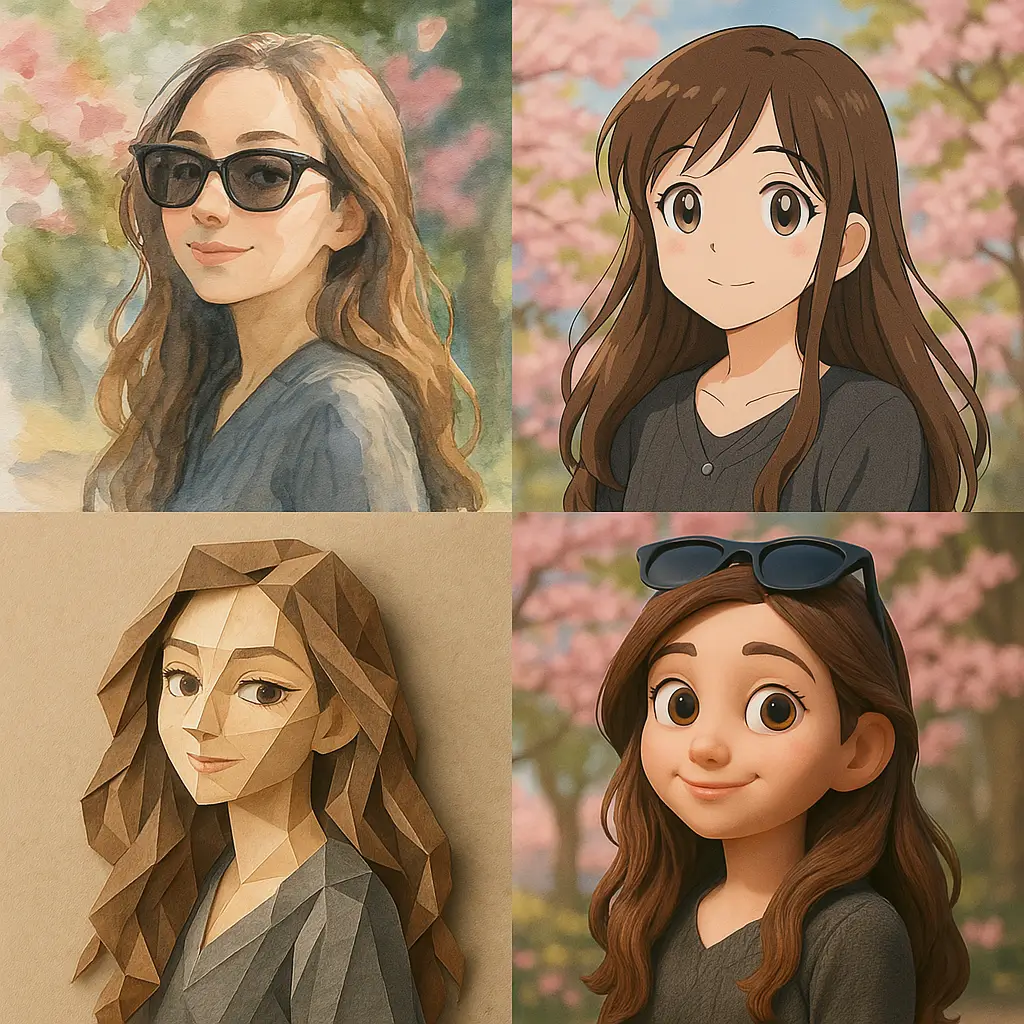
In recent weeks social networks have been flooded with Studio Ghibli-style images created with ChatGPT's new model. The Japanese animation studio's unique style captured users' hearts, but the truth is that ChatGPT's image-generation model is capable of far more than one style. From detailed anime to clay art, from origami to LEGO — the possibilities are nearly endless.
Among the most impressive styles: detailed anime with sharp outlines and high drama, theatrical puppetry with fabric textures and stitches, origami with sharp geometric forms, watercolor with soft color transitions, and LEGO style with colorful blocks. Each style creates a completely different aesthetic suited to different purposes.
Anime styles themselves break down into several categories: shōjo with large eyes and romantic elements, chibi with shrunken, cute proportions, seinen with realistic lines and mature themes, and kodomo with bright colors and simple designs for children. Understanding the differences between styles lets creators choose the exact aesthetic they're looking for.
The key to producing optimal results is specificity in the prompt. Specify the desired style, describe the mood, mention artists as inspiration, and define details like lighting, colors and textures. Combining different styles can create a unique look that doesn't exist anywhere else.
The world of AI art is just beginning, and every week new capabilities arrive. ChatGPT's model offers unlimited possibilities for creators, designers and marketers who want unique, professional visual content. The best time to start trying is now.